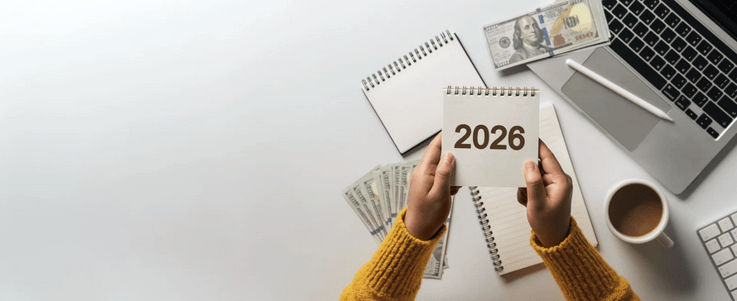
 For the small business owner, 2026 promises to be a year where efficiency meets authenticity. The tools available to “the little guys” are more powerful than ever, leveling the playing field against major corporations. However, consumer expectations have risen in tandem. Customers are smarter, more skeptical, and increasingly value-driven. Success in this near-future economy won't just be about having the best tech stack; it will be about using that technology to deliver a distinctly human experience.
The Maturity Of Artificial Intelligence
By 2026, the conversation around Artificial Intelligence will have shifted from "What is it?" to "Who is managing it?" The experimental phase is largely over. For small businesses, AI will no longer be a novelty tool for writing emails or generating images—it will be the engine room of daily operations.
From Chatbots To Autonomous Agents
The most significant shift will be the rise of autonomous AI agents. Unlike the passive chatbots of 2023 that waited for a prompt, 2026 agents will be proactive. Small businesses will leverage these agents to handle the administrative burden that typically consumes an owner's time. Bookkeeping, scheduling, basic legal compliance, and first-tier customer support will increasingly be delegated to autonomous systems.
The "Human-In-The-Loop" Premium
As AI content floods the internet and automated interactions become the norm, a counter-trend is emerging. There will be a premium placed on "unverified human interaction." Businesses that can prove a human is behind the service will be able to charge more. Small businesses should consider how they can highlight the human elements of their work, ensuring clients know they are paying for empathy, judgment, and personal connection, not just algorithmic output.
The New Definition Of Sustainability
Sustainability has transitioned from a corporate buzzword to a regulatory and consumer mandate. By 2026, vague promises of "eco-friendliness" will no longer satisfy customers or regulators.
Radical Transparency
Supply chain transparency will trickle down from enterprise requirements to Main Street. Digital product passports—QR codes or digital ledgers that show exactly where a product was made, who made it, and the carbon footprint of its journey—will become standard for retail goods.
The Circular Economy As A Business Model
Repair, resell, and recycle models will move from niche to mainstream. We are seeing a shift away from the "take-make-waste" economy. Small businesses are positioned to capitalize on this because they can offer the agility and local service that circular models require. Expect to see more local boutiques offering buy-back programs for their own goods, repair services integrated into standard warranties, and subscription models for physical goods (like tools or baby clothes) rather than outright sales.
Cybersecurity As A Utility
Historically, cybercriminals targeted big fish—banks, hospitals, and multinational corporations. But as those entities hardened their defenses, attackers shifted their sights to softer targets: small businesses.
The End Of "Too Small To Hack"
In 2026, cybersecurity is not an IT issue; it is a survival issue. Ransomware-as-a-Service (RaaS) has made it cheap and easy for criminals to attack thousands of small businesses simultaneously. Automated attacks look for unpatched software or weak passwords, locking owners out of their systems until a fee is paid.
Biometric Standardization
Passkeys and biometric authentication (face scans, fingerprints) will largely replace traditional passwords. This improves security but requires small business owners to upgrade their hardware. The days of running a business on a seven-year-old laptop with Windows 10 are numbered; the security risks will simply be too high.
Navigating The Financial Landscape
The era of near-zero interest rates is a distant memory. The economic environment of 2026 is characterized by caution, alternative financing, and the digitization of currency.
Diversified Funding Sources
With traditional bank loans becoming stricter and more expensive, small businesses will turn to alternative financing. Revenue-based financing—where capital is provided in exchange for a percentage of future gross revenues—will become a preferred method for businesses with strong cash flow but few assets.
The Cashless Reality
While cash will still exist, its use in B2B and many B2C transactions will continue to decline. We are approaching a tipping point where the cost of handling cash (security, banking fees, time) outweighs the benefits for many small merchants. Seamless, contactless payments will be the expectation. Businesses that are "cash only" risk alienating a massive segment of the consumer base that essentially stopped carrying physical wallets years ago.
Quikstone Capital Solutions has officially reached its 20th anniversary, a moment that reflects two decades of dedication to supporting small businesses across the country. If you need cash for your business, contact us today. We have only one goal: to help your business succeed.