

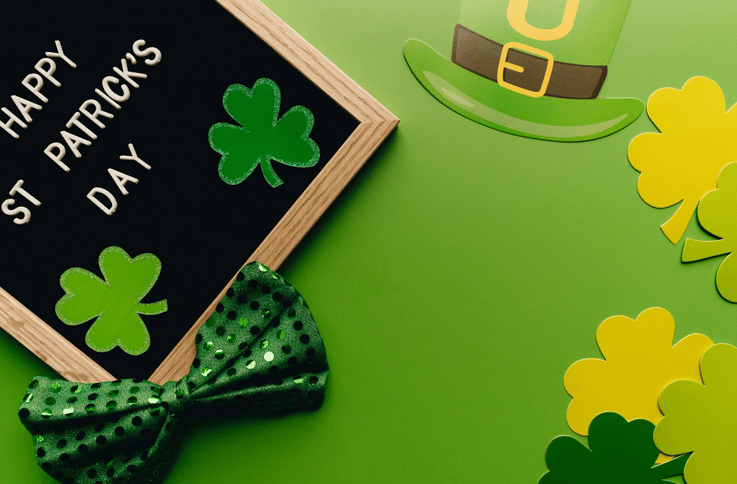
 Every year on March 17th, millions of people around the globe put on their brightest green clothing, pin a shamrock to their lapel, and gather to celebrate Irish culture. Streets fill with bagpipers, rivers magically change color, and local pubs overflow with enthusiastic crowds. The holiday has grown from a quiet religious observance into one of the most widely celebrated cultural festivals on the planet.
Blue Was The Original Green
If you went back in time to early celebrations, wearing green might have gotten you strange looks. For many centuries, the color associated with St. Patrick was a specific shade of light blue. This color, known as "St. Patrick's blue," appeared on ancient Irish flags and was used in the insignia of the Order of St. Patrick. The shift to green happened gradually, gaining momentum during the Irish Rebellion of 1798. Irish soldiers wore green uniforms to make a political statement against the British, who wore red. Over time, green became the defining color of Irish national identity.
The First Parade Happened In America
You might expect the oldest St. Patrick's Day parade to have taken place in Dublin. Historical records show that the first recorded parade actually took place in North America. For a long time, historians believed a 1762 parade in New York City held the record. Recent discoveries indicate that an even earlier parade occurred in 1601 in a Spanish colony in what is now St. Augustine, Florida. The event was organized by the colony's Irish vicar. In contrast, Ireland did not host an official, large-scale parade for the holiday until the 20th century.
Pubs Used To Be Closed On The Holiday
Millions of people currently celebrate by visiting their local pub for a pint of stout. For most of the 20th century, this would have been impossible in Ireland itself. Because it was strictly viewed as a religious holiday, Irish law mandated that all pubs remain closed on March 17th. People attended church services and enjoyed a quiet meal at home with their families. The Irish government eventually lifted this law in the 1970s to help boost tourism and accommodate the growing international interest in the festival.
Corned Beef Is An American Custom
Corned beef and cabbage is considered the ultimate meal for the occasion in the United States. In historical Ireland, beef was extremely expensive and considered a luxury meat. Traditional Irish meals on this feast day were much more likely to feature Irish bacon or salted pork. When Irish immigrants arrived in America in the 19th century, they found that beef brisket was relatively cheap. They purchased this meat from their Jewish neighbors in urban centers like New York City, creating a brand new culinary tradition that has stuck around for generations.
Leprechauns Originally Wore Red
Modern depictions show leprechauns dressed head-to-toe in bright green suits with matching top hats. Early descriptions in Celtic folklore tell a very different story. These solitary fairies were typically described as wearing red jackets laced with gold, along with traditional buckled shoes. They were known as shoemakers for other fairy folk and were notoriously grumpy and mischievous. The switch to green clothing happened alongside the broader cultural shift that made green the primary color of Irish heritage.
The Odds Of Finding A Four-Leaf Clover
While the shamrock is the true symbol of the holiday, the four-leaf clover is deeply tied to the concept of the "luck of the Irish." Finding one in a patch of regular grass is a rare thrill. Plant geneticists estimate that the odds of discovering a four-leaf clover are about 1 in 10,000. The fourth leaf is the result of a rare genetic mutation in the white clover plant.
Since 2005, Quikstone Capital Solutions has been a trusted advisor to thousands of merchants. Quikstone provides these merchants with easy, fast, and flexible working capital for all their business needs. If you need cash for your business, contact us today. We have only one goal: to help your business succeed.